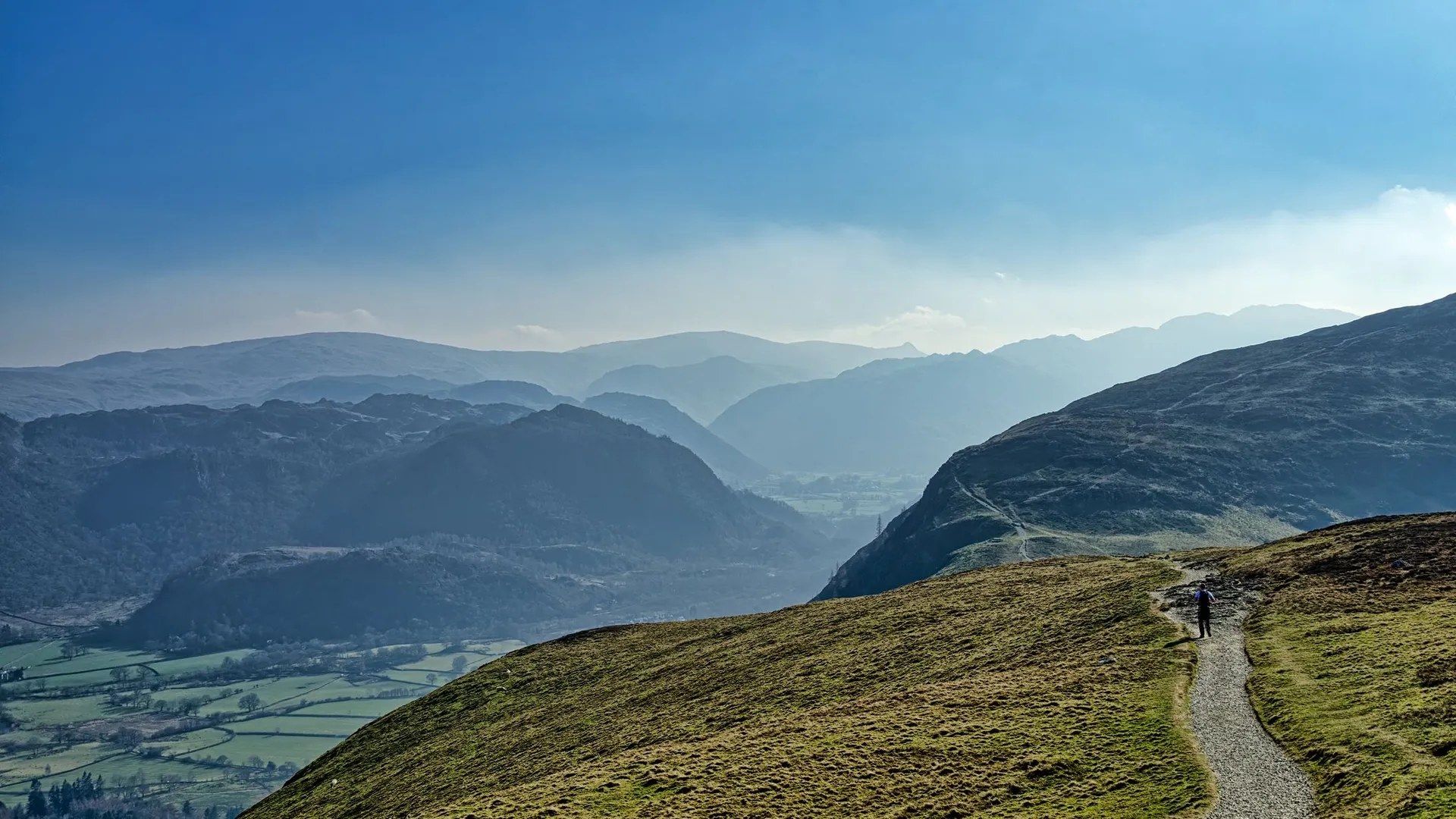
Lone hiker walking along a mountain path above a misty valley under a blue sky
Scroll Scroll

The Catbells Walk: A Guide to the Lake District's Favourite Fell

The Catbells walk is one of the most popular fell walks in the Lake District, and it's easy to see why. Rising steeply from the western shore of Derwentwater near Keswick, this distinctive little peak delivers ridge walking, a touch of scrambling and some of the finest summit views in the national park, all in a couple of hours. It's a favourite with first-time walkers and seasoned hikers alike, and for anyone staying in Borrowdale, Catbells sits at the northern end of the valley, easily reached from the Royal Oak.

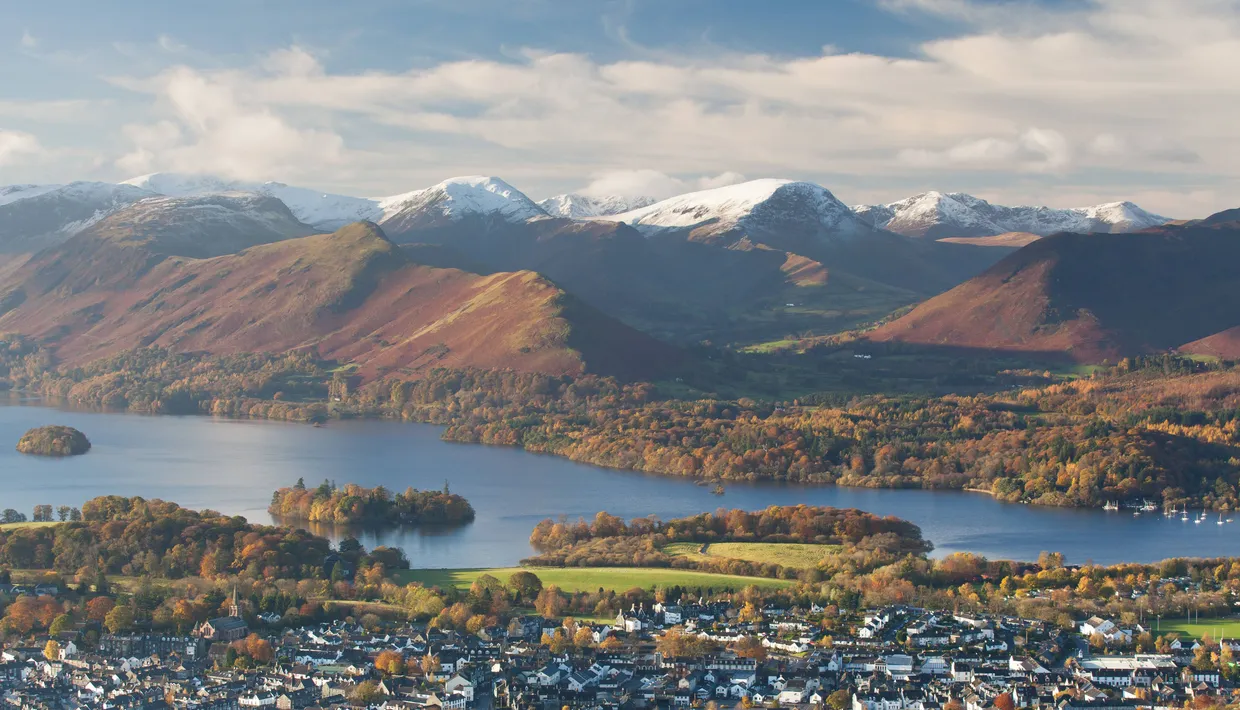
Aerial view of Keswick beside Derwentwater, with autumn woodland and snow-covered Lake District fells under a cloudy sky.

Why walk Catbells

At 451 metres (1,480 feet), Catbells is modest in height but generous in reward. From the summit you look out across Derwentwater to Keswick and the great bulk of Skiddaw beyond, while the quiet Newlands Valley falls away on the western side and Borrowdale opens to the south. Few walks in the Lakes give so much for so little effort. The great fellwalker Alfred Wainwright was especially fond of Catbells, describing it as a family fell that grandmothers and grandchildren could climb together. The name's origins are less certain, though it's often thought to derive from an old term for the den of the wild cat.

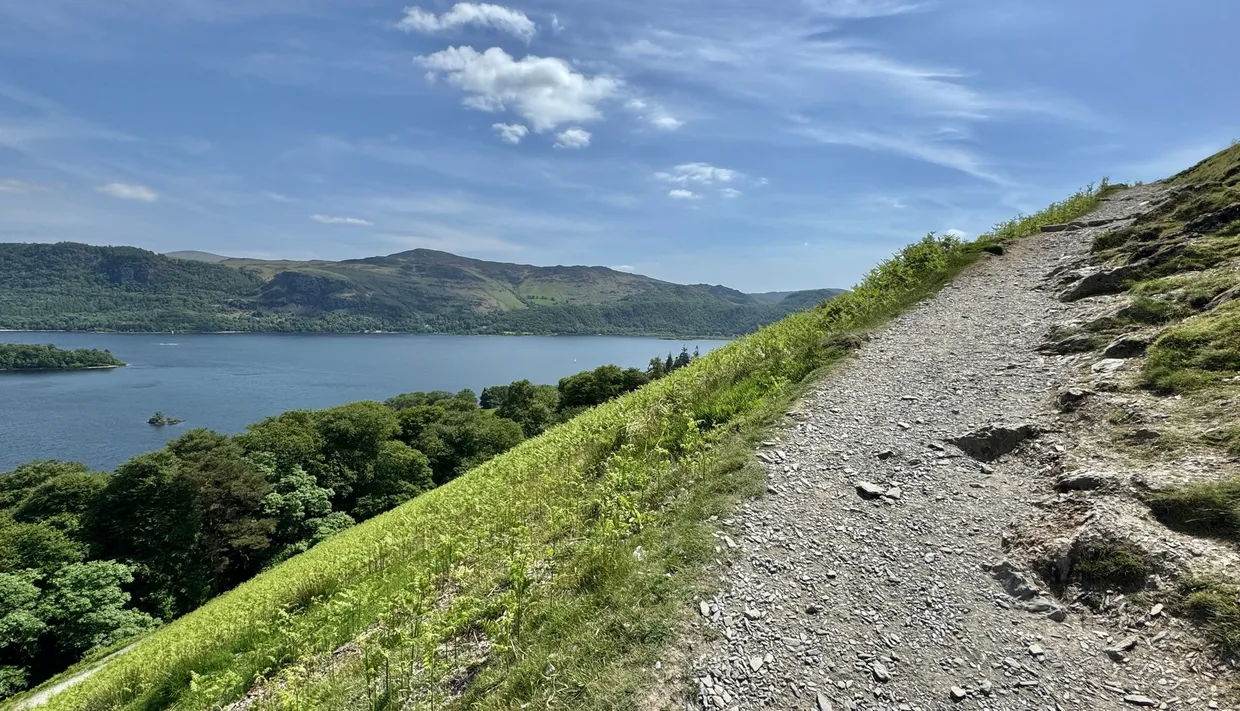
Rocky hillside path overlooking a blue lake, wooded shoreline and green mountains beneath a bright cloudy sky.

The Catbells route

The classic circular route is around 3.5 miles and takes most walkers two to three hours, depending on how long you linger at the top. The usual starting point is Hawes End, on the western side of Derwentwater. From here a signed path climbs the north ridge over Skelgill Bank, steepening as it goes, with a false summit that catches a few first-timers out before the final pull.

Near the top comes the walk's one real test: a short, rocky scramble where you'll need to use your hands. It looks more intimidating than it is, and in dry conditions, taken steadily, most walkers manage it comfortably. Beyond the summit cairn you can descend south to Hause Gate and loop back along the lower bridleway to complete the circuit or extend the day along the ridge toward Maiden Moor. Wear sturdy footwear, take a waterproof whatever the forecast, and give the rock your full attention when it's wet.

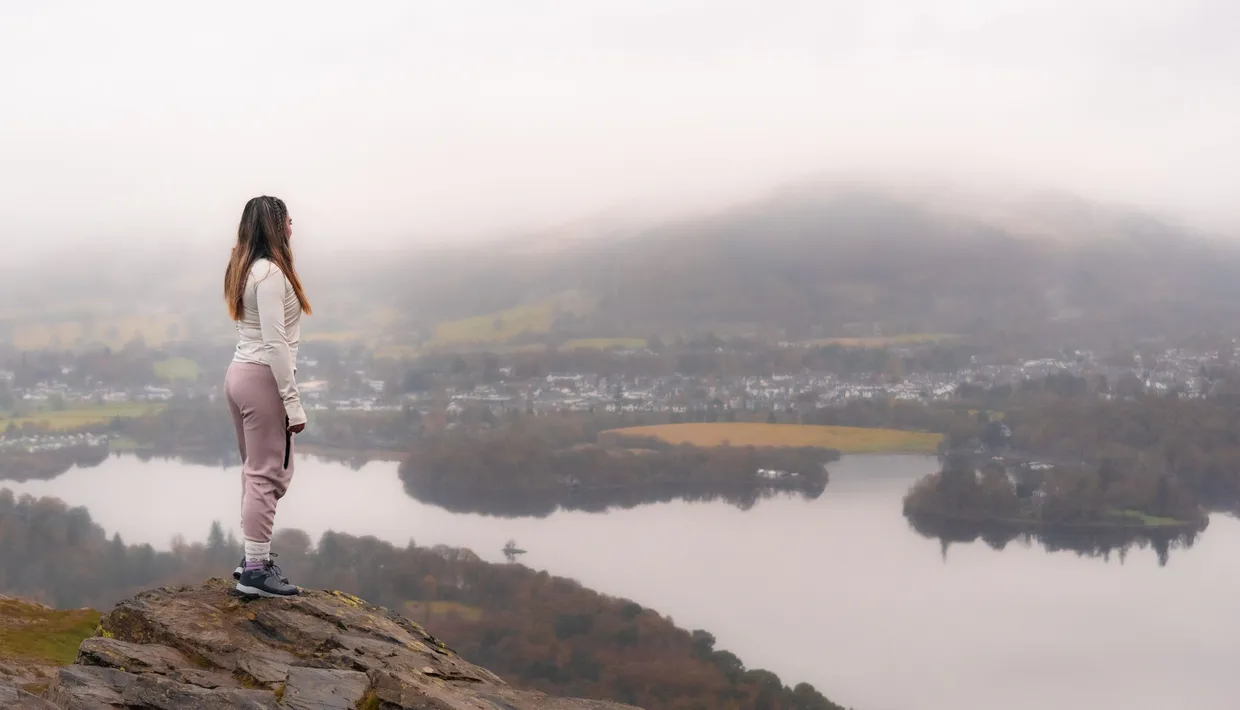
Woman standing on a rocky hilltop overlooking a misty lake and valley.

Walking Catbells without a car

You don't need a car to reach Catbells, and one of the best approaches leaves the driving behind entirely. Parking near Hawes End (postcode CA12 5UE) is limited to a handful of free roadside spaces that fill very early, so the car can be more trouble than it's worth in peak season.

The finest alternative is the Keswick Launch across Derwentwater to the Hawes End landing stage, a short and scenic boat trip that turns the approach into part of the adventure. Stepping off the launch at the foot of the fell, with the ridge rising ahead, is a memorable way to begin. A seasonal bus also runs along the western shore, and keen walkers can set out on foot from Keswick through Portinscale. Arriving car-free means no jostling for a space and no worrying about the drive home.

Where to stay near Catbells

Catbells makes an ideal outing from a Borrowdale base, and the Royal Oak in Rosthwaite sits in the same valley, at its peaceful southern end below the fells. You can spend the morning on the ridge above Derwentwater and be back among the quiet of Borrowdale by the afternoon, with a warm welcome, good food and a comfortable room waiting after a day on the hill. It's the kind of walk that's all the better for having somewhere restful to return to.

View Our Rooms

FAQs

BOOK DIRECT